Why Small Businesses Need a Website?
Is your business invisible online? Learn why small businesses need a website to secure trust, automate bookings, and own their data growth.
Do you want to know why small businesses need a website? A modern website gives your company a trusted home where customers can find you and book your services at any time of the day or night. Without one, you are missing out on the majority of local people who look for your skills online every single day.
Quick Summary: The Reality Check
Relying only on social media pages means you are building on rented digital land. Algorithms change, accounts get locked, and you lose your audience overnight. A website gives you full data ownership and acts as your round-the-clock digital infrastructure.
It turns random search traffic into booked jobs through automated form follow-ups and clear booking tools. If you want to build lasting trust and keep your calendar full, a conversion-first UX infrastructure is no longer optional. It is the core engine of your business growth.
The Danger of Rented Digital Land
Many owners think a social media profile is enough to run a brand. We see this mistake all the time in our work. When you use only social apps, you face a massive platform dependency risk. Those platforms control who sees your work.
An unexpected change in the algorithm can hide your posts from your followers. Your page can even get shut down by mistake. That is why smart brands do not rely on rented space. A website gives you complete data ownership.
When you own your site, you own your future. You do not have to worry about sudden rules or fee hikes from giant tech companies. You can read more about this on the Australian Competition and Consumer Commission page about digital platforms.
Our team focuses on building stable systems. We believe every local brand deserves a safe home online. You can view our custom internal tools to see how we build systems that keep your data safe.
Turn Web Traffic Into Cold Hard Cash
A great site is much more than a pretty brochure. It is a tool built for conversion rate optimization (CRO). That means the pages are designed to guide visitors to take action. They might call you, fill out a form, or book a job.
Most generic sites fail because they focus only on looks. We call this the fluffy aesthetics trap. A site must have a strong conversion-first UX infrastructure. It should load fast and be simple to use on a mobile phone.
When a site has a clear user experience (UX) design, people stay longer. They can find your phone number and your list of services in just two seconds. This simple structure lowers your customer acquisition cost (CAC).
You spend less money on ads because more visitors become paying clients. It makes your marketing dollars work much harder for you. You can learn more about our process on our web design services page.
Build Real Consumer Trust Signals
People judge your business by your web presence. Studies show that most users judge a company's worth based on its site design. If you do not have a site, many people will choose a competitor instead.
A professional site builds immediate trust. It displays consumer trust signals like customer reviews, licensing details, and clear case studies. This is crucial for service providers like NDIS clinics, trade teams, and law firms.
People need to know you are legitimate before they invite you into their homes or hire you. A bad online presence creates an obsolete digital footprint. It makes your business look closed or out of touch.
A clean site shows that you care about your work and your clients. For extra tips on building web trust, check out the W3C Web Accessibility Initiative guidelines.
Why Small Businesses Need a Website for 24/7 Leads
Your physical shop or office has closing hours, but your website never sleeps. A site gives you 24/7 lead generation. It works for you while you rest, while you are on a job, or while you take a holiday.
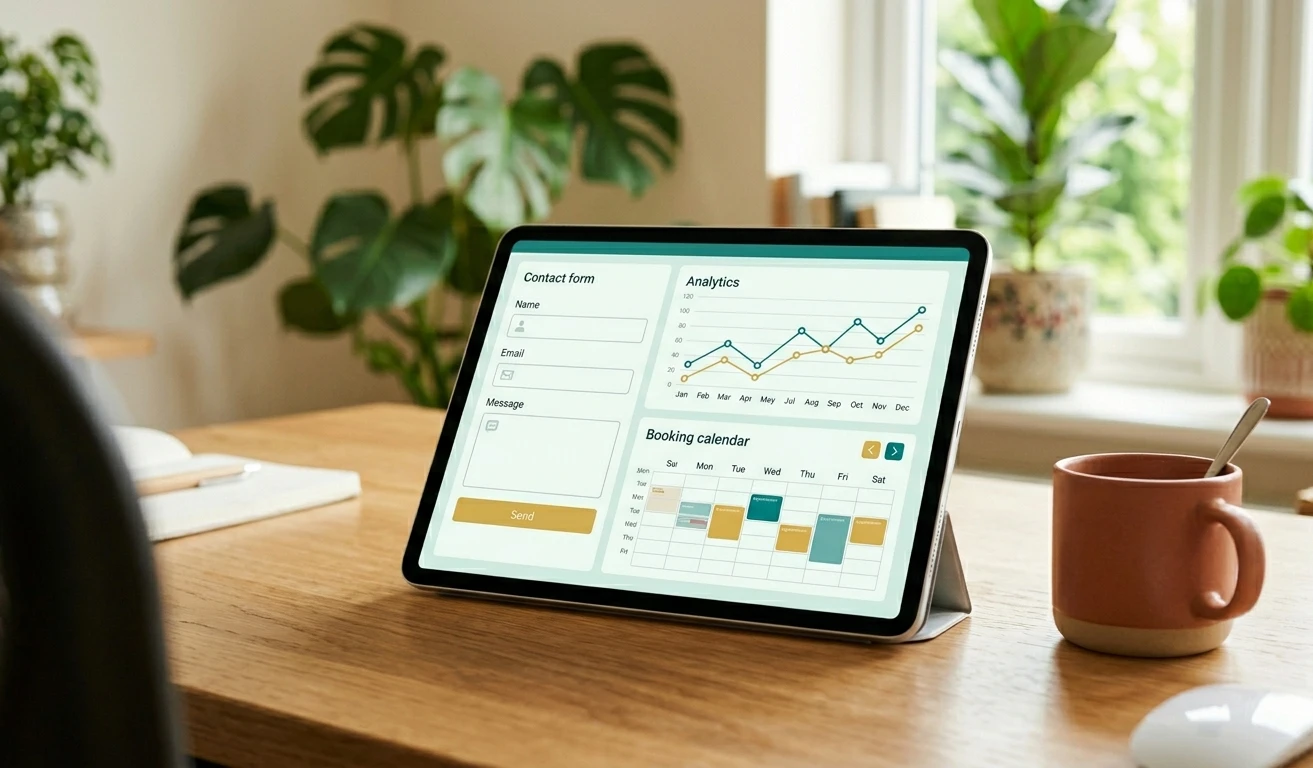
With the right tools, your site can handle tasks automatically. You can add 24/7 booking automation so clients can pick a time slot that suits them. This is what modern customers want. Most people prefer to book services online without making a phone call.
We can connect your contact forms directly to your phone or CRM system. This sets up automated form follow-ups that reply to new clients instantly. You never miss a hot lead because you were too busy to answer the phone.
To see how these tools can save you hours of manual work every week, take a look at our AI automation systems page.
Dominate Local Searches in Your Area
When people need a plumber, a coach, or a lawyer, they search online. They look for terms like "near me" or "local service provider." If you do not have a site, you are invisible to these buyers.
A good site helps you build a strong local SEO footprint. This means search engines can see exactly what you do and where you work. It helps you appear at the top of local maps and search pages.
This visibility gives you steady organic search traffic without paying for expensive ads. It creates a high return on investment (ROI) that grows over time. The more content you share, the more search engines value your brand.
You can read expert tips on search ranking factors over on the Search Engine Journal blog.
Frequently Asked Questions
Why do small businesses need a website if they have social media?
Social media platforms limit your reach and control. A website offers full data ownership and protects you from algorithm changes. It allows you to build a system tailored to making sales.
Is a website hard to maintain for a local business?
No, a modern site built on a reliable content management system (CMS) is very easy to manage. We build systems that are simple to update so your team can edit text and images with ease.
How does a website bring in more customers?
Your site works as a lead capture engine. It uses clear forms, local search tactics, and mobile design to catch people who need your help and turns them into booked clients.
Ready to Grow Your Business?
We build custom, fast websites that turn search traffic into loyal, paying customers.